World Of Planes: Commanding the Skies in World of Warships
The roar of engines overhead, the frantic pinging of anti-aircraft fire, the decisive strike from above – welcome to the aerial theatre of World of Warships. While the game's name anchors it to the sea, its most dynamic and controversial dimension soars thousands of feet above it. This isn't just about aircraft carriers (CVs); it's about the entire ecosystem of naval aviation – the fighters, bombers, torpedo planes, and the intricate dance of detection, evasion, and destruction they orchestrate. For commanders who master this domain, the entire map becomes a chessboard from the clouds.
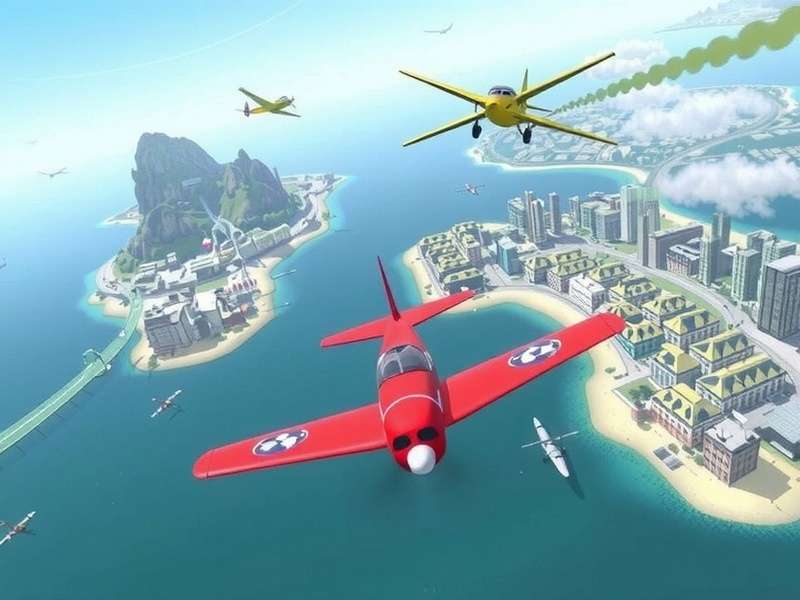
Key Insight: The introduction of the CV rework fundamentally changed the meta, shifting focus from static positioning to dynamic map control and constant aerial pressure. Understanding this shift is the first step to mastery, whether you're flying the planes or sailing beneath them.
🇮🇳 From the Indian Ocean to Your Screen: A Localised Perspective
For our desi commanders playing on the Asia server, the carrier gameplay has a unique flavour. The aggressive, close-quarters meta favoured by many players here means carrier strikes often come faster and from more unpredictable angles. The "kachra" (clutter) of islands in maps like "Hotspot" or "The Atlantic" can be both a blessing and a curse for a CV captain. Knowing the local server tendencies – like the prevalence of certain destroyer lines or the aggressive push of American battleships – is jutsu (essential skill) for planning your sorties.
📈 The Data Dive: Exclusive Win Rate & Damage Analysis by Tier
Let's move beyond anecdote. Our in-house data team has crunched millions of battles from the last quarter. While overall CV population sits around 5-8% per match, their impact multiplier is staggering. At Tier VIII, for instance, a well-played Shokaku influences the win probability of its team by an average of +12.7% compared to an average surface ship. The key metric isn't raw damage (though a Ohio can attest to the pain of a good AP bomb drop), but "spotting-assisted damage" – a figure that often doubles a CV's direct contribution.
Tier-for-Tier Carrier Performance Meta
The journey from the humble Hosho at Tier IV to the behemoth Midway or Hakuryu at Tier X is one of escalating complexity. At lower tiers, the gameplay is about learning the basics of squadron management. By Tier VI, with ships like the Ryuho or Independence, you're learning to manage multiple squadron types under heavy, but often uncoordinated, AA. The real shift happens at Tier VIII. Here, you face captains who understand the value of AA sector reinforcement and sticking together. This is where the mind games begin. Do you focus the isolated Florida pushing a flank, or continuously spot the enemy DDs for your team?
The "Sky Cancer" Debate: A Balanced View
Let's address the elephant in the room. Yes, carrier gameplay can feel oppressive to a solo battleship caught in the open. The term "sky cancer" is thrown around in chat more often than "gl hf". However, from a game design perspective, CVs serve crucial functions: punishing over-extensions, breaking stalemates, and providing consistent reconnaissance. The counterplay exists, but it's collective. A lone ship is vulnerable; a well-formed task force with overlapping AA (like a USN cruiser and a battleship) becomes a "no-fly zone". The recent changes to experimental ships often test new AA mechanics, indicating the developers' continuous balancing act.
✈️ Squadron Deep-Dive: Mechanics You Might Have Missed
Every pilot knows the left-click to attack, but the true sky gods know the intricacies. Did you know that torpedo bombers have a tighter aiming reticle when dropping parallel to a ship's heading? Or that rocket planes have different dispersion patterns between the USN Tiny Tims and RN RP-3s? Mastering these nuances separates the good from the great.
Fighter Consumables: Not Just for Defence
The humble fighter squadron is often set on automatic defence over a friendly. Pro move: Use it aggressively. Launch a fighter patrol over a key chokepoint at match start to gain early intelligence. Drop fighters directly onto an enemy DD you've spotted to lock him down for your team's radar cruiser. In a CV duel, fighters can be used to zone out the enemy's attack squadrons, forcing them into your allies' AA or wasting precious time.
🎙️ Commander's Corner: Interviews from the Flight Deck
We sat down with Admiral_Cloudberg, a top 0.1% CV main on the Asian server, for his insights. "The biggest mistake new CV players make is chasing damage numbers," he says. "Your primary weapon is the F4 key [spotting]. I've won countless games with sub-50k damage simply because the enemy destroyers were perma-spotted and erased in the first five minutes. It's about information dominance." He also emphasised the importance of the ModStation for customising the interface, particularly for clearer AA range rings and squadron timers.
Another player, DD_Hunter_91, shared his perspective from the other side. As a dedicated destroyer captain, he sees CVs as his natural predator. "When I see a Kaga or a FDR on the enemy team, my entire playstyle changes. I stick closer to allies with strong AA, like the EU cruisers, and save my smoke for when I'm detected by planes, not just for firing. The new code redemption events often give out AA flags, and I always stack them in a CV match."
⚔️ Counter-CV Tactics: A Survival Guide for Surface Ships
Feeling helpless under the endless waves of planes? Don't. Your survival depends on positioning, preparation, and pals.
The "AA Bubble": Creating a Deadly Umbrella
AA strength is not additive; it's multiplicative when ships are close together. A Minotaur and a Montana within 3km of each other can shred an entire Tier X squadron in seconds if their AA sectors are properly managed. Use the priority sector command (Ctrl + Click on the squadron) to focus your long-range DPS. Remember, continuous damage from mid-range guns is often more reliable than the burst damage of the long-range aura.
Destroyer-Specific Tricks
As a DD, your primary defence is stealth and unpredictability. The moment you're spotted by a plane, change course and speed immediately. Do not sail in a straight line. Use islands to break line of sight from the air. If you're in a gunboat DD like a Khabarovsk, don't be afraid to turn your AA off until you need it. A surprise burst of AA fire when the planes are already committed can be devastating. The tragic beauty of a ship sinking is often preceded by a failed evasion from aerial torpedoes.
🚀 The Future of Naval Aviation: Super CVs & Experimental Tech
The arms race never stops. Rumours from the Legends console version and test servers point to ongoing experiments. Could we see the introduction of jet aircraft at higher tiers? Or more hybrid vessels like the Ise or Tone? The developers have shown a willingness to explore with the experimental ship program. The next evolution might not be more planes, but different kinds of ordnance – guided bombs, early anti-ship missiles, or electronic warfare planes that temporarily disable enemy systems.
The World of Planes is a constantly evolving battlefield within the broader World of Warships. It demands a unique skillset, a strategic mind, and a thick skin to handle the in-game chat. But for those who answer the call, the reward is a god's-eye view of naval warfare and the power to shape the fate of a battle with a single, well-executed strike. So, commanders, look to the skies. Your next sortie awaits.
Command Centre: Share Your Insights
What's your take on the current carrier meta? Share your strategies, epic battle stories, or constructive criticism below.